Székesfehérvár, Austro-Hungarian Monarchy, currently Hungary — March 26, 1886
Death data:
Buenos Aires, Argentína — April 28, 1953
Denomination:
Roman Catholic
Ecclesiastical status:
diocesan
Diocese / Order:
Veszprém
Ordination level:
priest
Priestly ordination:
Bécs, Austro-Hungarian Monarchy, currently Wien, Austria — 1908
Place of burial:
az Angolkisasszonyok Intézete temetője
Plátanos, Argentína
Biographical data
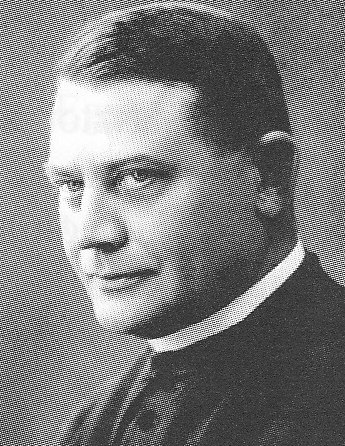
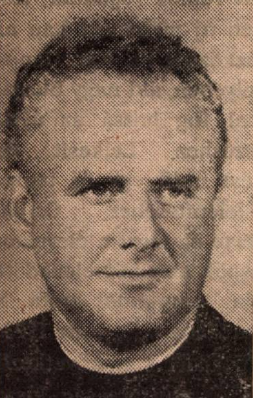
As a student at the Pázmáneum, he was ordained a priest in 1908; he served as an assistant pastor in Vienna and continued his studies at the Augustinum. He earned his doctorate in Vienna in 1909. Beginning in 1912, as a student at the Collegium Germanicum et Hungaricum, he studied history and archaeology at the Institutum Teutonicum in Rome. Between 1926 and 1927, he oversaw the construction of the twin-towered, Neo-Romanesque church in Balatonfüred (the “Red Church”). From 1943, he served as a canon in Oradea. His name was mentioned several times as a candidate for the episcopate. He was the founding rector of the Pontifical Hungarian Institute in Rome. In 1948, he emigrated to Argentina. He was the spiritual founder of the Centro Hungaro and the Hungarian Circle of Córdoba.
Domestic service locations
From
To
Place i
Current name, country i
Church / institution
Position
1909
1910
Pápa, Austro-Hungarian Monarchy
Hungary
I.
assistant pastor
1910
1912
Veszprém, Austro-Hungarian Monarchy
Hungary
I.
assistant chaplain
1913
1918
Veszprém, Austro-Hungarian Monarchy
Hungary
episcopal librarian; then, from 1914, castle chaplain; from 1915, seminary professor (history and canon law); and, in the meantime, field chaplain from 1914 to 1916
1918
1928
Balatonfüred, Kingdom of Hungary
Hungary
parish priest who built the church
Foreign service locations
From
To
Place
Current name, country
Church / institution
Position
1908
Bécs, Austria
assistant chaplain
1912
Róma, Italy
pursuing studies
1929
1947
Róma, Italy
Advisor on ecclesiastical affairs and canon law at the Hungarian Embassy to the Holy See until 1944; during that time, from 1940 to 1947, he served as the founding rector of the Pontifical Hungarian Institute
1947
1953
Plátanos, Argentína
Spiritual Director of the Hungarian Institute of English Ladies
Literary activity
1911–1912–ben a Veszprémi Hírlap, 1923–1925 között a Balatonfüred hetilap felelős szerkesztője, majd 1926–1928 között főszerkesztője.
1911 Aestetikai tanulmányok. Veszprém.
1912 Biblia pauperum. Wien.
1913 Die Paulustüre, Ein Meisterwerk der byzantischen Kunst aus dem XI. Jahrhundert. Rom.
1914 Mária Terézia halála és a római Kúria. Budapest.
1916 XV. Benedek, a békepápa. Budapest. (Népiratkák 312)
1916 A római Via Nomentana-i Szent Ágnes Egyház. Veszprém.
1931 Róma : a város a történelem tükrében. Budapest.
1931 Róma - A város története. Katolikus Szemle.
1940 Egyház és állam. Budapest. (Actio Catholica 78)
Veszprém, Austro-Hungarian Monarchy, currently Hungary
episcopal librarian; then, from 1914, castle chaplain; from 1915, seminary professor (history and canon law); and, in the meantime, field chaplain from 1914 to 1916
Advisor on ecclesiastical affairs and canon law at the Hungarian Embassy to the Holy See until 1944; during that time, from 1940 to 1947, he served as the founding rector of the Pontifical Hungarian Institute
Luttor Ferenc: personal record. In: Historical directory of Hungarian, Hungarian-descended, and Hungarian-speaking clergy serving abroad. Available at: https://www.diaszporalelkipasztorok.hu/persons_v2/view.php?id=674 (accessed: 2026-07-07).
Last modified: June 18, 2026 22:59 |
Opened: 104 times