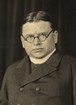
Beregpapfalva, Austro-Hungarian Monarchy, currently Gyilok (Ділок), Ukraine — March 29, 1890
Death data:
Zemplénagárd, Hungary — December 3, 1973
Denomination:
Greek Catholic
Ecclesiastical status:
religious
Diocese / Order:
bazilita (Ordo Sancti Basilii Magni)
Ordination level:
priest
Entry into religious life:
Máriapócs, Austro-Hungarian Monarchy, currently Hungary — February 11, 1911
First (temporary) vows:
June 2, 1912
Perpetual vows:
June 3, 1915
Priestly ordination:
Ungvár, Austro-Hungarian Monarchy, currently Uzshorod (Ужгород), Ukraine — January 14, 1924
Place of burial:
Máriapócs, Hungary
Biographical data
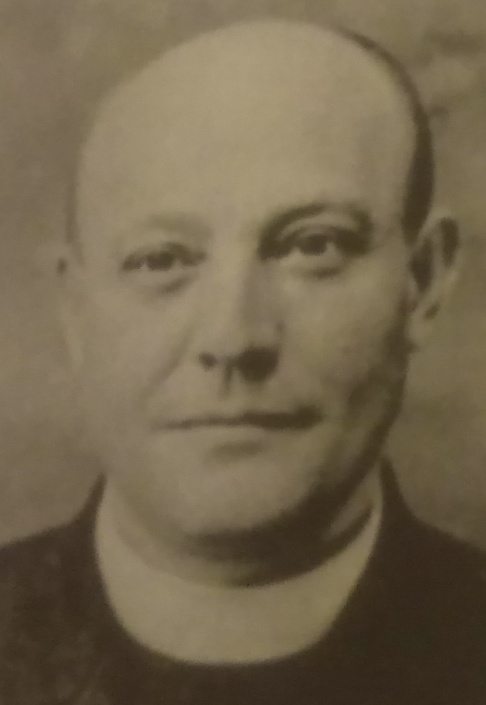
He came from an ancient family of priests. He completed his secondary education in Munkács, Uzhhorod, and Szilágysomlyó, then continued his theological studies at the Greek Catholic seminary in Uzhhorod. He entered the Order of Saint Basil in Máriapócs on February 11, 1911. He took his simple vows on June 2, 1912, and his perpetual vows on June 3, 1915. Identifying with the reform movement within the Order, he became acquainted with the renewed Basilian way of life in Krechov, Poland, which had a decisive influence on his later work. He was ordained a priest relatively late, on January 14, 1924, in Uzhhorod. Prior to this, he had already held significant educational positions: between 1916 and 1920, he served as prefect at the Uzhhorod boarding school. He then moved to Máriapócs, where he served as an assistant pastor and catechist while leading popular missions and retreats. A particularly important phase of his life was his missionary work between 1932 and 1938, when he served in Transcarpathia and the United States. According to his obituary, as an outstanding orator and confessor, he tirelessly traveled among Hungarian Greek Catholic communities. His apostolic zeal, simplicity, and directness made him memorable to many. Although the exact list of his American posts is unknown, according to recollections, he visited numerous Hungarian communities during his missionary journeys and played a significant role in the spiritual care of the faithful living in the diaspora.
After his return, he worked again in Máriapócs. Between 1939 and 1950, he served as a religion teacher at the local teacher training college. Following the communist dissolution of the religious orders, he lost his former framework of ministry; between 1950 and 1969, he lived in seclusion in the village of Oros with his brother. However, he did not cease his priestly ministry even then: wherever the opportunity arose, he undertook auxiliary pastoral duties.
He spent the final years of his life in Zemplénagárd, where he served as an assistant pastor from 1969 onward. Even in his old age, he retained his cheerfulness, his prayerful spirit, and his monastic simplicity. His obituary particularly highlights his deep devotion to Mary, his loyalty to his fellow monks, and the quiet humility with which he bore the vicissitudes of history.
Domestic service locations
From
To
Place i
Current name, country i
Church / institution
Position
1916
1920
Ungvár, Austro-Hungarian Monarchy
Uzshorod (Ужгород), Ukraine
boarding school prefect
1920
1932
Máriapócs, Kingdom of Hungary
Hungary
assistant pastor, religious education teacher
1932
1938
Kisberezna, Csehszlovákia
Malij Bereznij (Малий Березний), Ukraine
assistant abbot
1939
1950
Hajdúdorog, Kingdom of Hungary
Hungary
the teacher-trainer of religious education (in other sources: Máriapócs)
1950
1969
Oros, Hungary
retired, serving as an assistant pastor at his brother’s parish
1969
1973
Zemplénagárd, Hungary
retired, assistant pastor
Foreign service locations
From
To
Place
Current name, country
Church / institution
Position
1932
1938
USA
He undertook missionary journeys in the United States. He made three missionary tours there between 1933 and 1938; the first with his fellow monk Teofán Szkiba, the second—which lasted several years — with the Basilian monk Marián Hám-Sztankaninec, who died there, and the third with Miklós Dudás, who later became a diocesan bishop, in 1937–38. He conducted missions in nearly all Hungarian and Ruthenian parishes.
He undertook missionary journeys in the United States. He made three missionary tours there between 1933 and 1938; the first with his fellow monk Teofán Szkiba, the second—which lasted several years — with the Basilian monk Marián Hám-Sztankaninec, who died there, and the third with Miklós Dudás, who later became a diocesan bishop, in 1937–38. He conducted missions in nearly all Hungarian and Ruthenian parishes.
Legeza Elek Tivadar OSBM: personal record. In: Historical directory of Hungarian, Hungarian-descended, and Hungarian-speaking clergy serving abroad. Available at: https://www.diaszporalelkipasztorok.hu/persons_v2/view.php?id=642 (accessed: 2026-07-07).
Last modified: June 23, 2026 12:37 |
Opened: 116 times