Description
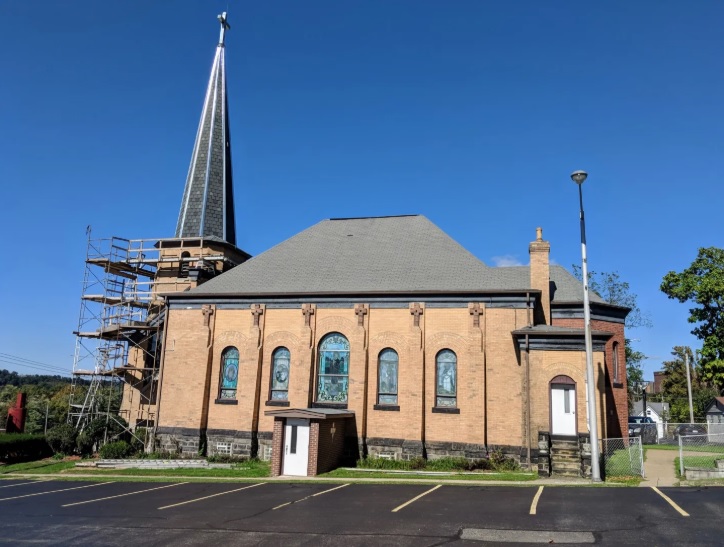
The Hungarian Roman Catholic Parish of Saint Imre (Saint Emory’s Church—often mistakenly referred to as “Saint Emory’s” in contemporary English sources) was established in 1904 in Connellsville, Pennsylvania, to provide pastoral care for Hungarian Catholics living in the mining region of Fayette County.
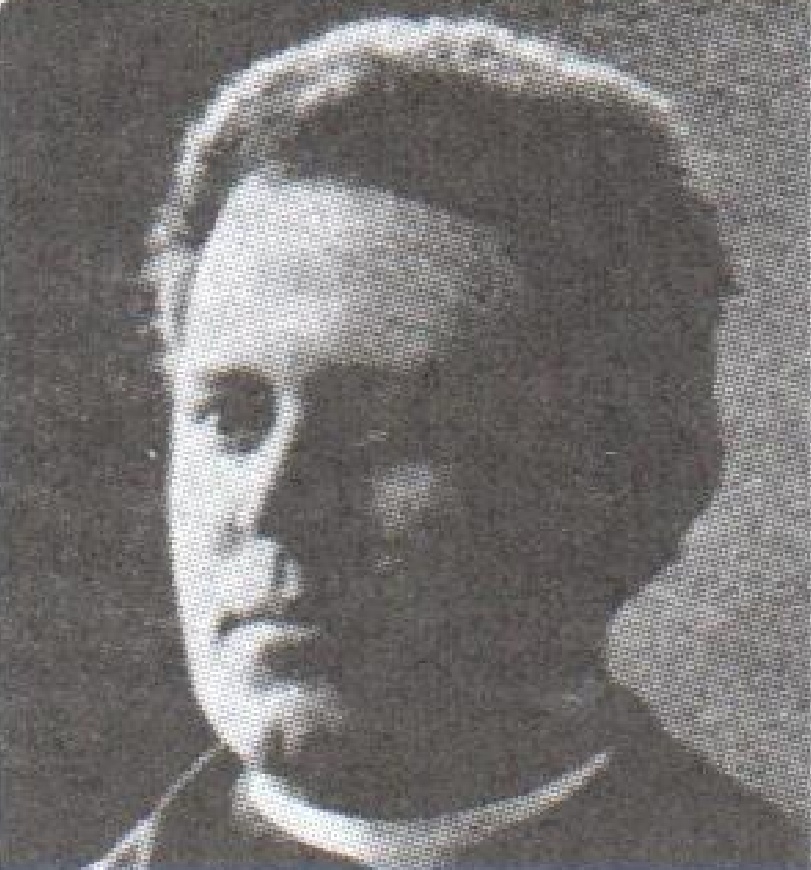
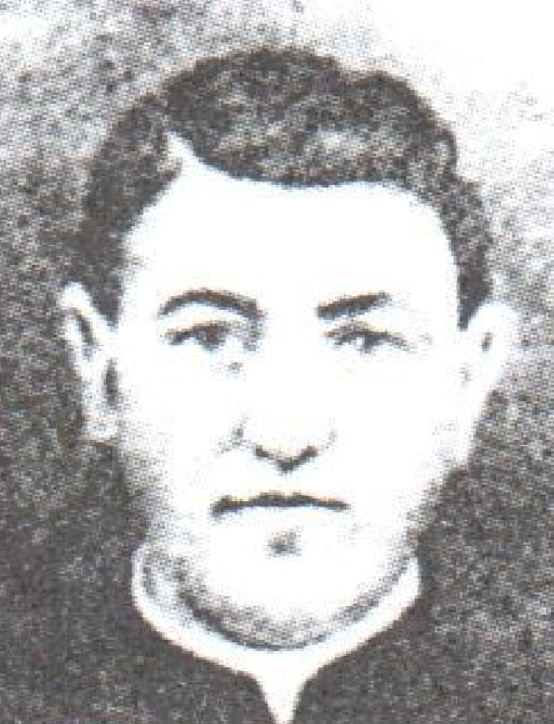
The parish was organized on May 8, 1904, when the parish community was established under the leadership of Father Béla Lőrik. Representatives from 38 mining towns in Fayette County attended the founding meeting. About 100 founding members participated in the establishment of the church, joined by 11 Hungarian associations; together, they pledged $4,552 toward the construction of the church.
The first lay officers were:
Imre Brutovszky, president;
András Tóth, vice president;
Péter Rustek, treasurer;
András Bak, Secretary.
Thirty-five fundraisers were entrusted with supporting the construction effort; they visited more than a thousand Hungarian families in Fayette County to collect donations. The founding members included, among others, Imre Brutovszky, Péter Rustek, Lajos Olvháry, András Dojcsák, István Superák, Pál Kraynak, János Bak, András Tóth, and János Vízi.
The contract for the construction of the church was signed on July 29, 1904. The parsonage already standing on the lot was moved to a more secluded location, and until the new church was built, worship services were held in its basement.
The first child baptized in the new church was Anna Viszlay, the daughter of János Viszlay and his wife, a couple living in Davidson. The congregation’s first wedding was that of Ferenc Putnosky and Julianna Pankotay from Leisenring. The first event held in the new church was a double wedding: the marriages of John Malomka Jr. and Elizabeth Szerences, as well as Julius Szabó and Mary Kray, were blessed simultaneously.
The first funeral service was held for István Czakó, a baby boy just one week old, who was the child of József Czakó and his wife, a family from Leisenring.
During the first thirty years of the parish’s existence, approximately 1,600 children were baptized and 620 marriages were solemnized, while 13 priests served the parish.
The community suffered a severe blow on December 19, 1907, when the infamous Darr mine explosion occurred. In the tragedy, 83 breadwinners lost their lives; funeral services were held simultaneously at St. Imre Church for more than fifty of the victims, while others were buried in other churches in the area. The loss was so severe that the parish’s very future was threatened; however, thanks to the solidarity of the remaining parishioners, the community survived.
Another crisis arose in August 1913, when the church faced foreclosure due to declining membership and financial difficulties. The situation was resolved with the help of János Bak, József Szepsy, József Joscak, and John Malomka Jr., as well as Kálmán Kovács, the pastor of St. Stephen’s Parish in McKeesport, thus averting the auction.
The Great Depression of the 1930s further reduced the number of parishioners. By then, the parish comprised 450–500 families, who were grouped around four centers—Connellsville, Brownsville, Daisytown, and Masontown. The pastor ministered to Hungarian Catholics in a total of 59 mining communities, regularly visiting these centers.
In 1951, with the establishment of the Diocese of Greensburg, the St. Imre Parish also came under the jurisdiction of the new diocese. A few years later, it was reorganized as a mission church of the Immaculate Conception Parish. By decision of Bishop William G. Connare, the church located at 425 South Arch Street was closed on October 18, 1970, in its 66th year of existence.