Description
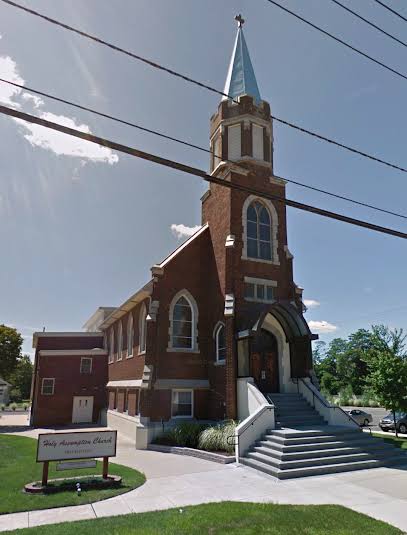
The Hungarian Catholic community in Roebling, New Jersey, formed in the early 20th century around the town’s famous wire rope and steel factory. For a long time, there was a tradition among the local Hungarians that some of the chain links for the Széchenyi Chain Bridge in Budapest were made by Hungarian workers at the Roebling Company factory. As early as 1912, the growing Hungarian community began organizing an independent parish, which was officially established in 1913 under the title of Nagyboldogasszony (Holy Assumption).
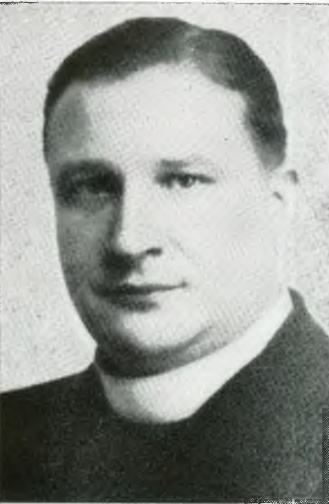
The first Hungarian-language Mass was celebrated for the congregation by Rev. Pál Csizmadia, pastor of nearby South River, celebrated the Mass for the congregation, and later Fr. Lőrinc Horváth regularly visited the community from Philadelphia. Fr. Ferenc Gross became the parish’s first permanent pastor in 1921. He was responsible for the construction and consecration of the church, as well as for organizing the school system. At his invitation, the Sisters of Divine Love began their teaching ministry during the 1923–1924 school year.
In 1939, the parish came under the care of the Hungarian Franciscan Province named after St. John of Capistrano, and in 1940, the bishop declared it a territorial parish. The Franciscans established a friary, and a convent was built for the nuns. Due to the growth of the community, the church was expanded in 1948, and five hold of land were purchased for use as a cemetery.
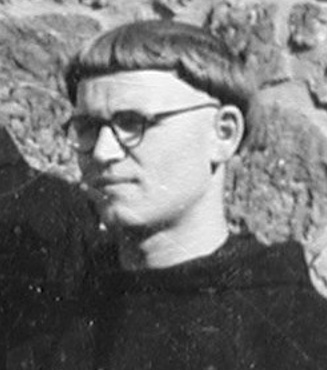
In the decades following World War II, several well-known Hungarian Franciscans served at the parish. Fr. Tarzíciusz Gerencsér, OFM, took over leadership of the community in 1944; he was succeeded by Fr. Kapisztrán Petrie, OFM, and then, from 1950 to 1960, by Fr. Dr. Julián Füzér, OFM. During Fr. Füzér’s tenure, a modern school with nine classrooms was built in 1957. Among his successors were Fr. Alpár Forró, OFM; Fr. Ödön Illés, OFM; and Fr. Jenő Lenner, OFM. In accordance with the reforms of the Second Vatican Council, a new altar was erected, the liturgy in the national language was introduced, a carillon was installed, and in 1969 a parish council was formed to manage the affairs of the parish.
A vibrant community life flourished around the parish. Active groups included the Franciscan Third Order, the Rosary Society, the PTA, the altar servers’ group, the Society of the Blessed Virgin Mary, and the Catholic Youth Organization (CYO). Several Hungarian Franciscan friars were laid to rest in the cemetery next to the church.
The Hungarian Franciscan presence reached a turning point in 1993, when the St. John of Capistrano Hungarian Franciscan Custody was dissolved. The care of the parish was subsequently taken over by the Immaculate Conception Province, based in New York. The Hungarian pastoral tradition, however, lived on; a symbolic event in this regard occurred in 1990, when Bishop Attila Miklósházy, S.J., ordained the locally born Franciscan Father Louis Pintye, OFM, to the priesthood here.
By the end of the 20th century and the beginning of the 21st century, the size of the Hungarian community in Roebling had declined significantly, yet the parish survived. In the 2010s, as part of the reorganization of Catholic communities in the area, the formerly independent parish was merged into a larger parish structure. The Holy Assumption Church continues to function as a place of worship today, though it now serves the faithful as part of the Mary Mother of the Church Parish, established in 2022. Holy Masses are still held regularly in the church, so the building has not suffered the fate of many Hungarian-American churches, which lost their original function after being closed or repurposed for secular use.
Today, the church remains one of the centers of Catholic life in Roebling and is also an important reminder of the religious and community heritage of Hungarian immigrants in New Jersey. The cemetery next to the church and the graves of the Hungarian Franciscans continue to preserve the memory of the community’s more than 100-year history.